How to Start Your Own Jigsaw Puzzle Blog

If you love jigsaw puzzles and want to share your passion with the world you’re not alone. Whether you’re a collector, a solver, or a puzzle-making enthusiast, starting a jigsaw puzzle blog is the perfect way to connect with like-minded people and build a community around your favorite pastime.

Why now? Because niche blogs are thriving. r/Jigsawpuzzles on Reddit already has 90k+ subscribers. More and more readers are looking for specialized content that speaks directly to their interests — especially in areas like hobbies, games, and puzzles. That means your unique voice and puzzle expertise could find a welcoming, engaged audience faster than you think.

In this post, we’ll walk you through everything you need to start your own jigsaw puzzle blog.

Bonus: We’ll also show you how to make your blog interactive with fun tools like PuzzleMe, so your readers can play along with your posts. Let’s get started!

🧩 Step 1: Define Your Jigsaw Puzzle Blog Niche

Before diving into blog design or content planning, it’s important to define your niche — the specific angle or theme your jigsaw puzzle blog will focus on. Picking a clear direction not only helps you stand out but also attracts a loyal, engaged audience.

🎯 Decide Your Focus

There are many creative ways to approach jigsaw puzzles on a blog. Here are a few niche ideas to consider:

Puzzle Reviews

Share your thoughts on different puzzle brands, themes, materials, piece quality, and difficulty levels. Think of it as the go-to guide for fellow enthusiasts looking for their next purchase or play. Read & get inspiration from the NY Times.

DIY Puzzle Tutorials

Walk readers through how to create their own jigsaw puzzles at home — whether it’s using craft supplies, digital tools, or printable templates. Here is a video tutorial on making a DIY jigsaw.

Puzzle-Solving Techniques

Offer tips and tricks on how to sort pieces, identify patterns, and improve speed and accuracy, making it perfect for competitive solvers or curious beginners.

Interactive Puzzles

Curate or create puzzles that visitors can download or solve online. This niche pairs well with tools like PuzzleMe for interactive content. Here is a quick tutorial to make an interactive jigsaw puzzle online!

Educational or Therapeutic Use of Puzzles

Explore how puzzles can support child development, cognitive skills, mindfulness, or even occupational therapy. Great for parents, teachers, and health professionals.

🔍 Research Your Audience

Once you choose a direction, think about who you’re speaking to. Common audiences for jigsaw puzzle blogs include:

  • Casual solvers looking for fun, relaxing puzzle recommendations
  • Parents seeking screen-free activities for kids
  • Educators incorporating puzzles into lesson plans
  • Competitive puzzlers aiming to improve their skills
  • Therapists and professionals using puzzles in their work

Understanding your readers helps you shape your content, tone, and features (like downloadable PDFs or embeddable puzzles).

💡 Pick a Memorable Blog Name

Your blog name is your brand — make it relevant, catchy, and easy to remember. It could reference your niche, personality, or the puzzling process itself. Try a puzzle pun, a calming vibe, or a name that signals authority in the space.

Inspiration from existing blogs:

  1. My Jigsaw Journal – A personal diary-style blog chronicling puzzle journeys
  2. Jigsaw Puzzle Talk – A community-centric blog that suggests discussion and tips

Take a moment to check domain availability, social handles, and see how your name looks visually, You’ll be building your brand around it!

🧩 Step 2: Set Up Your Blog Platform

Once you’ve chosen your niche and blog name, it’s time to build your online home. Don’t worry — you don’t need to be a web developer. With today’s blogging platforms, setting up a professional-looking site is easier than ever.

Choose a Blogging Platform

Your platform is where your blog lives. It’s the engine behind everything readers see and interact with. Here are some beginner-friendly options:

  • WordPress (Recommended): Offers full control, thousands of plugins, and great scalability.
  • Wix: A drag-and-drop builder with stylish templates. Good for visual bloggers who want quick setup and minimal tech headaches.
  • Squarespace: Sleek and all-in-one, with beautiful templates and hosting included. Ideal if you prioritize design and simplicity.

Pro Tip: If you plan to embed interactive puzzles (like those created with PuzzleMe), make sure your platform allows HTML or iframe embedding. All the mentioned platforms allow this.

Get a Domain Name

Your domain is your blog’s address — like www.mypuzzlename.com. Choose something that reflects your niche and is easy to remember. Try to include relevant keywords like: Puzzle, jigsaw, games, solving, pieces. Use tools like Namecheap or GoDaddy to search domain availability, and aim for a .com extension if possible.

Choose a Clean, Responsive Theme

How to Start Your Own Jigsaw Puzzle BlogA good theme keeps your blog easy to read and pleasant to navigate — especially on mobile.

Look for a theme that’s:

  • Clean and uncluttered
  • Mobile-responsive (works on all screen sizes)
  • Easy to customize (fonts, colors, layout)
  • Compatible with your platform and plugins

Bonus if it comes with built-in blog templates and space for images or embedded puzzles!

Add Essential Plugins or Features

To grow and manage your blog smoothly, install a few core tools (especially if you’re using WordPress):

  • PuzzleMe WordPress Plugin – It allows you to quickly embed puzzles and pickers into your WordPress website. The plugin allows you to unlock additional features, such as social sharing and multiplayer.
  • SEO Plugin (like Yoast SEO or Rank Math) – Helps your posts rank better on Google
  • Contact Form Plugin – Let readers reach out or submit ideas
  • Newsletter Signup Form – Start building an email list from day one
  • Analytics – Track your traffic with tools like Google Analytics or Jetpack

🧩 Step 3: Plan Your Content Strategy

Comment
byu/SmythOSInfo from discussion
inSocialMediaMarketing

A successful blog isn’t just about writing — it’s about writing consistently and strategically. Whether you’re a casual puzzler or aiming to grow an audience, a solid content plan helps keep your blog active and discoverable.
Not sure what to write about? Here are some puzzle-friendly post ideas your audience will love:

  • Top 10 Jigsaw Puzzles for Beginners: Great for readers just getting started with the hobby.
  • Printable Puzzle of the Week: Offer downloadable puzzles to build a habit with your readers.
  • Why Jigsaw Puzzles Are Great for Mental Health: Combine research and storytelling to explore the therapeutic benefits of puzzling.
  • Interview with a Puzzle Designer: Bring in unique voices and behind-the-scenes insights.

These ideas can be customized based on your niche — whether you’re reviewing puzzles, creating your own, or exploring the psychology behind them.

Create a Content Calendar

Consistency is key. Plan your posts in advance using a simple spreadsheet or a content planning tool like Trello, Notion, or Google Calendar. Try to publish at least once a week or biweekly to build momentum.

  • Schedule evergreen content that stays relevant year-round (e.g., “Best Sorting Strategies for 1000-Piece Puzzles”)
  • Mix in seasonal or trending topics, like gift guides, puzzle challenges for holidays, or new puzzle releases

This balanced approach ensures your puzzle blog stays fresh and relevant throughout the year.

🧩 Step 4: Make Your Jigsaw Puzzle Blog Interactive

Want to make your puzzle blog stand out? Don’t just write about puzzles — let your readers solve them right on your site. Add Embeddable Puzzles with PuzzleMe.

Using a tool like PuzzleMe, you can embed interactive jigsaw puzzles directly into your blog. All your readers need to do is click and play — no downloads required. Try now:

Adding a PuzzleMe embed takes seconds and instantly boosts engagement. Adding interactive content not only makes your blog more fun — it also increases traffic, return visits, and word-of-mouth growth. When publishers like Scientific American use PuzzleMe’s interactive jigsaw puzzles, you know it is worth it!

🧩 Step 5: Build an Audience

Once your jigsaw puzzle blog is up and running, it’s time to bring in readers.

  • Leverage social media – Share puzzle photos, tips, and blog updates on Instagram, Pinterest, and in Facebook Groups dedicated to puzzle lovers.
  • Engage in communities – Join forums like Reddit’s r/Jigsawpuzzles or local puzzle clubs to connect with fellow enthusiasts.
  • Start a newsletter – Offer bonus puzzles or exclusive content to grow a loyal subscriber base. PuzzleBuzz is a great example!
  • Collaborate with brands – Reach out to puzzle companies for guest posts, interviews, or giveaways to expand your reach.

🧩 Step 6: Monetize Your Blog

Ready to turn your puzzle passion into profit? Here are a few ways to monetize:

  • Affiliate marketing – Recommend puzzle products and earn commissions via Amazon or puzzle brand affiliate programs.
  • Ad revenue – Use platforms like Google AdSense or Mediavine once you have steady traffic.
  • Sell your own puzzles – Create and sell digital or printable puzzles. Once you have a following, you can put special puzzles behind a paywall.
  • Launch merch – Offer puzzle-themed mugs, posters, or t-shirts through print-on-demand sites.
  • Host events – Run online puzzle challenges or virtual game nights for your community.

🧩 Step 7: Use PuzzleMe to Create Custom Puzzle Content

Once your puzzle blog is up and running, you’ll want ways to keep readers engaged. That’s where PuzzleMe comes in — a powerful, flexible platform designed for creating and embedding custom puzzles right into your site.

Creative display of the flexible user interface of PuzzleMe with the same jigsaw that is easily adaptable, visible and playable on a mobile, desktop and tablet.Why PuzzleMe?
Whether you’re running a casual jigsaw puzzle blog or building a puzzle brand, PuzzleMe offers tools that bring your content to life:

  • Create interactive jigsaw puzzles, crosswords, sudoku, and word searches
  • Mobile-friendly UI for smooth solving on any device
  • Multilingual support — perfect for global audiences
  • Easy embedding with a simple copy-paste HTML snippet (Read- No coding required)
  • Fully customizable — decide number, shape, and time of your jigsaw puzzle.

Example Use Case:

“Puzzle of the Week” Offer your readers a weekly interactive puzzle challenge directly on your blog — no sign-ups, no downloads, just instant play. PuzzleMe makes it easy to turn your images or ideas into playable puzzles in minutes.

Starting a puzzle blog is fun, rewarding, and a great way to connect with fellow enthusiasts. Whether you’re sharing reviews, printable puzzles, or interactive games, your blog can become a go-to destination for puzzlers around the world.

How to Host a Jigsaw Puzzle Competition Online

Jigsaw puzzles have long been a favorite pastime, but their digital transformation has taken engagement to a new level. Jigsaw puzzle online competitions offer a unique way to bring people together—whether for fun, learning, or competition.

Businesses, educators, and event organizers are increasingly leveraging digital puzzles to foster collaboration, enhance brand visibility, and create interactive experiences for their audiences. As offline competitions have long been a popular and prestigious format, online jigsaw competitions are emerging as the new buzz, offering greater accessibility and engagement in the digital era.


View this post on Instagram


A post shared by Karen Puzzles (@karenpuzzles)

Why Host a Jigsaw Puzzle Competition Online

Hosting an online jigsaw puzzle competition can serve multiple purposes:

  • Businesses can use puzzles to boost brand engagement and interact with their audience in a fun, memorable way.
  • Educators can incorporate puzzles into learning activities to enhance problem-solving and teamwork skills.
  • Event organizers can create an interactive experience that keeps participants engaged and entertained.

Seamless Solution for Online Jigsaw Puzzle Competitions

PuzzleMe, a leading digital puzzle platform, simplifies the process of creating and managing jigsaw puzzle competitions. With an intuitive interface, contest mode, leaderboards, and multi-device compatibility, PuzzleMe makes it easy for anyone to host a successful competition.

In this blog we will take you through the step-by-step process of hosting a successful jigsaw competition hassle-free!

Step 1: Define Your Goals and Audience

Before setting up your competition, defining your objectives and identifying the audience is crucial to ensure the event is engaging and relevant.

Who are you targeting: Are you catering to casual players looking for a relaxed challenge or students participating in an educational activity? Answering such questions will make the jigsaw relevant for the audience as well as serve your goal for the competition.

What’s the purpose: Clearly outline whether your competition is meant for team-building, brand engagement, educational reinforcement, or pure entertainment. A well-defined purpose helps shape the rules, format, and expectations for participants.

Choosing the right puzzle difficulty and theme: Tailor the puzzle’s complexity to match your audience’s skill level. A corporate event may benefit from a custom-branded puzzle incorporating company values, while an educational setting might feature historical events or scientific concepts to enhance learning.

Engagement and rewards: Consider adding incentives such as prizes, recognition, or certificates to boost participation and motivation.

By carefully planning these elements, you can create a competition that is both enjoyable and effective, ensuring maximum engagement and success.

Step 2: Choosing the Right Platform: Why PuzzleMe?

If you’re planning a competitive jigsaw puzzle event online, not all platforms offer the right tools to ensure fairness, excitement, and engagement.

PuzzleMe stands out with its powerful Contest Mode, designed specifically for creators, communities, and businesses looking to host secure, high-stakes puzzle competitions.

What is Contest Mode?

PuzzleMe’s Jigsaw Contest Mode transforms a standard puzzle game into a thrilling challenge. When activated, players start with broken pieces and have no preview of the final image, adding a layer of mystery and difficulty.

To preserve fairness, functions like image viewing and edges-only hints are disabled by default. This ensures that every participant is playing on equal footing, without shortcuts.

Why you need contest mode for your competitions:

  • Secure and Fair Play: Locked settings prevent unfair advantages.
  • Heightened Challenge: No image preview or hints boosts competitive spirit.
  • Real-Time Multiplayer Experience: Let participants play simultaneously in a shared contest environment.
  • Leaderboards and Timers: The timer starts as soon as the player logs in and at the end the leaderboard highlights the top performers, and builds excitement.
  • Fully Customizable Puzzles: Upload your own images, choose difficulty levels, and control the experience.
  • Cross-Device Compatibility: Players can join contests on desktop, tablet, or mobile—no barriers to entry.

Contest Mode provides the structure and excitement you need for a memorable and fair competition.

Step 3: Setting Up Your Jigsaw Puzzle Competition

Once you’ve defined your goals and chosen PuzzleMe as your platform, follow these steps to set up your competition:

1. Create a Jigsaw Puzzle on PuzzleMe

  • Login to PuzzleMe and select jigsaw puzzle.
  • Upload a custom image (e.g., brand logo, historical scene, artwork) or choose from PuzzleMe’s ready-made Library.
  • Adjust the number of pieces and design to control the difficulty level.

2. Define Competition Rules

  • Decide if it will be a solo or team-based competition.
  • Set time limits and a scoring system (e.g., fastest completion, accuracy)

3. Enable Multiplayer Mode & Leaderboards

  • Activate real-time multiplayer mode to allow participants to compete simultaneously.
  • Use leaderboards to track progress and keep participants motivated.

4. Test Before You Launch

  • Run a trial round to identify any technical issues.
  • Adjust difficulty based on participant feedback to ensure a balanced challenge.

D-Day: Hosting Jigsaw Competition Online

Jigsaw Puzzle Competition OnlineMake your jigsaw puzzle event both smooth and exciting with PuzzleMe’s Contest Mode, built for fairness and competitive fun. On the day of the event, enhance engagement by:

  • Hosting a live stream or group video call for real-time interaction.
  • Using chat or discussion forums to keep participants connected.
  • Encouraging social sharing with Puzzleme’s in-built features.
  • Announcing winners and showcasing results to build buzz.

PuzzleMe makes it easy—with customizable puzzles, multiplayer mode, leaderboards, and contest-ready settings, your competition will be both professional and memorable.

Ready to host? Start planning your online jigsaw competition today and bring your community together through a playful contest!

Host your first online contest

Add Games to Squarespace: All You Need to Know

In today’s digital landscape, websites are no longer just static pages filled with text and images. They’ve evolved into dynamic spaces where users expect engaging and interactive experiences.

Among the various tools to captivate your audience, games have emerged as a standout choice. For Squarespace users, adding games to your site can be a game-changer (pun intended). Whether you run a blog, an e-commerce store, or a portfolio, integrating interactive games is a creative way to differentiate your website and enhance the user experience.

add games to squarespace

How to Add Games to Squarespace

In this guide, we’ll explore why games are a valuable addition to Squarespace, outline the best tools and techniques for incorporating them, and provide actionable tips to make the process seamless. By the end, you’ll have everything ready to add interactive games to your Squarespace site and captivate your audience.

Squarespace provides flexibility when it comes to adding custom content, including interactive games, by leveraging its Code Snippet feature. Here’s how you can easily embed games and a bonus option for more advanced customizations.

Using Code Snippet

Squarespace’s Code Block allows you to insert custom HTML, JavaScript, or iframe code into your site, making it a straightforward solution for adding interactive games. Here’s a step-by-step guide:

Create Your Game

Use an external tool or game platform that generates embeddable code for games such as crosswords, quizzes, or puzzles. Platforms typically provide HTML or iframe snippets for embedding. Here is one of the simplest ways to create your games:

PuzzleMe, developed by AmuseLabs, is the perfect tool for integrating games into your Squarespace website. It’s user-friendly, versatile, and doesn’t require advanced technical skills. Here’s how you can add a PuzzleMe game to your Squarespace website:

  • Go to PuzzleMe and sign up or log in.
  • Design your game using intuitive & AI-supported puzzle creation tools, such as crosswords, word searches, or quizzes.
  • Once your game is ready, click on the “Preview & Publish your game” option to generate the embed code.
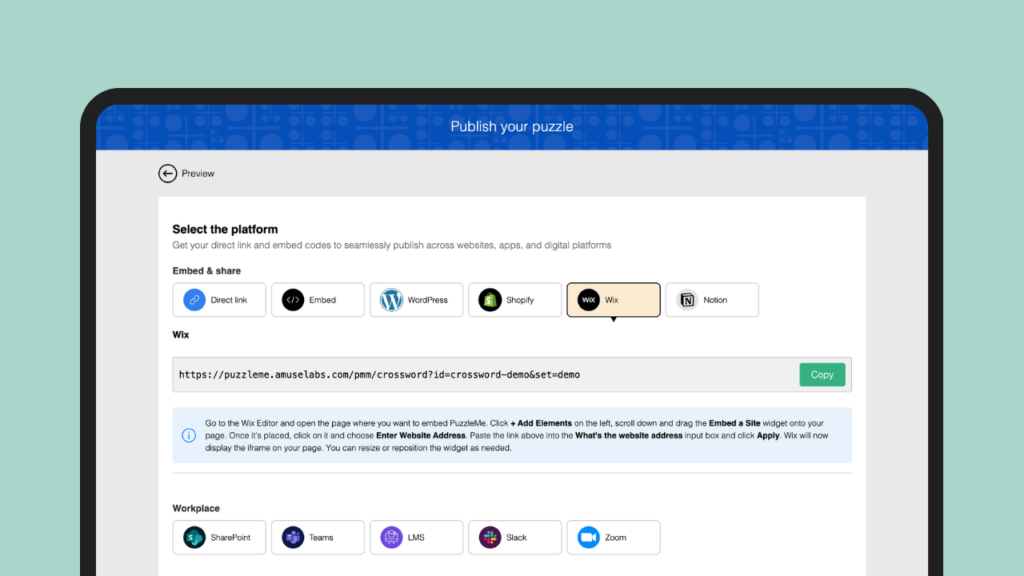
  • You have multiple options for embedding your game. You can choose the JS embed, Iframe embed, or even a Direct link for embedding it into Squarespace.

add games to squarespace

Copy the Embed Code

Once you’ve created your game, locate the option to “Share” or “Embed.” Copy the provided HTML or iframe code.

Log in to Your Squarespace Account

Navigate to your Squarespace editor and open the page where you want to add the game.

Add a Code Snippet

  • Click on the section where you want to display the game.
  • Select + Add Block > Embed.
  • Paste the HTML or iframe code into the ‘Code Snippet’.
  • If you have a direct link you can paste it in the ‘Link’ option.

add games to squarespace

Save and Preview

  • Save the changes and preview the page to ensure the game displays correctly.
  • Adjust the block size or padding if needed to optimize the display.

Bonus Option: Custom Development

If you want a highly customized experience, such as integrating games tailored specifically for your brand or site design, hiring a developer can be a valuable investment.

When to Consider Custom Development:

  • Advanced Features: If you need games with unique functionalities, such as leaderboards, user authentication, or timed challenges.
  • Brand Alignment: When you want a seamless, fully branded game experience that matches your website’s design.
  • Performance Optimization: For sites with high traffic, a developer can ensure the games load quickly and integrate smoothly.

Custom game development allows you to create an interactive experience that sets your Squarespace site apart and caters specifically to your audience’s needs. While it requires a much larger investment, the result is a polished and unique feature that leaves a lasting impression.

Tools to Add Games to Squarespace

Here’s a breakdown of popular tools and platforms you can use to create and embed games on your Squarespace site, ranging from beginner-friendly options to advanced solutions:

1. Interactive Content & Game Platforms

These tools allow you to create games like quizzes, crosswords, and polls quickly and easily, often without needing coding skills.

  • PuzzleMe: The best choice for publishers and creators looking to create and add custom smart games like crosswords, sudoku, word searches, quiz, etc for no cost and seamless embedding.
  • Quizlet: Great for educational quizzes and flashcards.
  • HTML games: Pre-made games available for embedding.
  • Kahoot!: Ideal for interactive learning and group participation.

Why Use Them?: These platforms are user-friendly and ideal for non-coders. They come with templates and analytics to help track audience engagement.

Want to see how it feels to play interactive games? Try now!

2. Embeddable Code Generators

If you’re looking for lightweight and easy-to-embed options, code generators allow you to insert simple games into Squarespace without additional software.

  • HTML5 Game Templates: Sites like CodePen or GitHub offer prebuilt HTML5 game snippets (e.g., simple memory games, word scrambles) that you can customize and embed.
  • Iframe Generators: Platforms like iFrame Generator that let you generate an iframe code for games hosted on external servers. Please refer to the copyright policy of all the platforms in use beforehand.

Why Use Them?: These tools are perfect for basic game embedding and require minimal technical knowledge.

3. Customizable HTML5 Game Creators

For more advanced users or brands requiring custom games, HTML5 game creators offer full control over game design and functionality.

Construct 3: A no-code game builder that allows you to design games and export them as HTML5 for easy embedding.

Phaser: A powerful JavaScript framework for building custom games. Ideal for developers looking to create tailored gaming experiences.

GameMaker Studio 2: Allows both drag-and-drop game creation and coding options to export interactive HTML5 games.

Why Use Them?: These tools give you maximum flexibility to create custom-branded, advanced games that align with your website’s style and audience needs.

Case Study

Let’s take a look at a real-life example of how interactive games have been successfully integrated into a Squarespace website and the results achieved.

Chris Piuma’s Crosswords

Website: Chris Piuma Wordgarbler
Chris Piuma, a multi platform blogger, uses Squarespace to showcase their crosswords, providing an interactive experience for visitors. The website seamlessly integrates crossword games using embeddable tools, offering an engaging way for visitors to interact with the content.

squarespace crossword

What Worked Well:

Easy Integration: By embedding crosswords using a plugin like PuzzleMe, Chris was able to add an interactive and visually appealing game directly to the Squarespace platform.

User Engagement: Visitors can solve puzzles directly on the site, encouraging longer time spent on the page. This kind of engagement is ideal for creators looking to build an active and returning audience.

Professional Look and Feel: The crosswords blend seamlessly with the site’s design, enhancing the overall aesthetic and user experience.

This case demonstrates how Squarespace users, regardless of their niche, can leverage simple tools like embeddable game plugins to transform their websites into dynamic and engaging spaces.

Getting started is easier than you think—tools like the PuzzleMe plugin provide a simple way to take the first step toward creating an interactive website experience.

Take the first step!

Employee Gamification: 5 Unique Ideas to Boost Engagement

Ever wondered how to make work feel less like, well, work? Enter employee gamification – the art of bringing game-like elements into the workplace. Gamification in the workplace is about tapping into our natural love for challenges, achievements, and a bit of friendly competition.

You might be thinking, “Why bother?” Well, engaged employees are the secret to a thriving business. Research from Gallup shows that highly engaged teams are 21% more profitable.

In this post, we’re going to explore five creative ways to add gamification in the workplace and boost engagement. And the best part? You don’t need to be a game developer to make it happen.

With software like PuzzleMe, you can add gamification to your workplace effortlessly. PuzzleMe is the best digital platform for smart games trusted by industry leaders like The New Yorker, The Atlantic, WeWork, etc. Want to see gamification in action right now?

5 Unique Ideas for Employee Gamification

Let’s dive in and discover how you can transform your team’s everyday tasks into engaging experiences. From skill-building challenges to wellness campaigns, we’ve got something for every team.

employee gamification final

Skill-Building Challenges

Who said learning can’t be fun? Skill-building challenges turn the process of acquiring new knowledge into an exciting game. By introducing varied games you can transform mundane training sessions into captivating quests.

Take Penske Logistics, for example. They’ve revolutionized their approach to teaching supply chain concepts using PuzzleMe crosswords. Instead of dry manuals, employees engage with interactive puzzles that test and reinforce their industry knowledge. By gamifying the workplace, Penske boosted engagement seamlessly.

The benefits are twofold. Employees grow their skills in an engaging way, making them more likely to retain and apply what they’ve learned. Meanwhile, your company builds a more knowledgeable, competent workforce. It’s a win-win that makes continuous learning a natural part of the workday.
Penske crossword- employee engagement

Another interesting use-case is Mubdala who developed a Cybersecurity Crossword on PuzzleMe for gamifying complex security concepts. Try your hand here!

Performance Leaderboards

Performance leaderboards introduce competitive elements into the workplace, leveraging employees’ natural desire for achievement and recognition. These tools can track and display various performance metrics, fostering a sense of healthy competition among individuals or departments.

employee gamificationFor example, a company might implement a departmental leaderboard showcasing key performance indicators (KPIs) such as sales targets, customer satisfaction scores, or project completion rates. Similarly, individual leaderboards could highlight personal achievements in areas like productivity, innovation, or learning progress.

Comment
byu/Wrong-Big4819 from discussion
insales

While gamification in the workplace can drive performance, it’s crucial to maintain a balance with collaboration. Effective implementation of leaderboards should:

  • Rotate metrics regularly to prevent focus on a single aspect of performance
  • Include team-based leaderboards to encourage collective effort
  • Recognize improvement and effort, not just top performers
  • Ensure transparency in scoring methods

When properly balanced, leaderboards can motivate employees, increase transparency, and provide clear performance benchmarks while maintaining a collaborative work environment.

Team-Building Quests

Collaborative gamification presents an opportunity to transform team projects into engaging group activities. This approach aims to enhance teamwork, improve problem-solving skills, and foster a more collaborative work environment.

A prime example of this strategy can be found in PuzzleMe’s multiplayer puzzle offerings. This digital tool can facilitate group jigsaw puzzles and team sudoku challenges which serve as practical exercises in communication, strategic thinking, and collective problem-solving. And the best part? It works wonders with remote teams as well.

gamification in workplaceThe benefits of such activities extend beyond the immediate task. These shared experiences contribute to improved team cohesion and more effective communication. Participants learn to identify and utilize individual strengths within the group, leading to more efficient problem-solving in real work scenarios. Moreover, the sense of shared accomplishment can positively influence overall workplace culture.

Inclusivity Campaigns

Inclusivity campaigns leverage gamification to promote diversity, equity, and inclusion (DEI) in the workplace. These initiatives aim to increase awareness, foster understanding, and encourage inclusive behaviors among employees.

PuzzleMe offers customizable puzzles and quizzes that can be effectively used for inclusivity campaigns. For example:

      • Daily diversity fact crosswords
      • Cultural awareness word searches
      • Inclusive language challenge puzzle

A real-world application of this approach comes from MiQ, a leading programmatic media partner. MiQ implemented daily LGBTQ+themed Custom Wordle/Wordrow puzzles to increase awareness and discussions around inclusivity, reinforcing MiQ’s commitment to diversity. Try yourself:

Onboarding Adventures

Gamifying the onboarding process can transform new employee orientation into an engaging and memorable experience. This approach aims to make the integration of new hires more efficient and enjoyable, potentially improving retention rates.

Hear from a Reddit user:

Comment
byu/OrangeHQ from discussion
inhumanresources

One effective method involves the use of interactive quizzes focused on company culture and history. A notable example is the ‘Celebrating 150 Years of Innovation’ quiz created for Unisys, which helps new employees learn about the company’s long history and achievements in an interactive manner.

employee gamificationBy incorporating employee gamification into the onboarding process, organizations can create a more positive first impression, potentially leading to better long-term employee retention and faster integration of new team members.

Take the First Step

Implementing gamification in the workplace doesn’t require a complete overhaul of existing systems. The key is to start small and refine your approach based on employee feedback and observed results.

Consider beginning with a single gamification element, such as a weekly team puzzle or a monthly skill-building challenge. As you gauge its effectiveness and reception, you can gradually expand your gamification strategy.

PuzzleMe offers a versatile platform to explore various gamification options for your workplace. From customizable quizzes to interactive team challenges, our tools can help you enhance employee engagement in a measurable and enjoyable way.

Boost employee engagement!

How to Add Games to Wix: A Complete Guide

In the ever-evolving digital landscape, creating an engaging online experience is more critical than ever. Adding games to Wix websites is an excellent way to achieve this, as modern sites aren’t just about delivering information—they’re about holding your audience’s attention and inspiring interaction.

Interactive content, particularly games, is rapidly becoming a must-have feature for websites. Games not only entertain but also significantly boost visitor retention and dwell time.

This guide walks you through how to easily add games to your Wix site using different platforms and provides resources for you to start your gamification journey.

Add Games to Wix

add games to wix

Whether you’re looking for ready-made solutions, app-based integrations, or custom coding options, Wix provides several versatile methods to achieve your goals. In this guide, we’ll explore three effective ways to incorporate games into your Wix site.

Each approach caters to different needs, from simplicity to advanced customization, ensuring there’s a solution for every website owner.

Embedding by External Game Platforms

One of the simplest ways to add games to your Wix website is by embedding games from external platforms. They offer a simple, efficient, and effective execution of your gamified ideas.

Below, we’ll explore compatible gaming platforms, how to get embed codes, and a detailed step-by-step process for integration.

Compatible Gaming Platforms

Before embedding, ensure the platform you’re using is compatible with Wix. Here are a few platforms to create and share games that you might consider for adding games in wix:

  1. PuzzleMe: The best choice for publishers and creators looking to create and add custom smart games like crosswords, sudoku, word searches, quiz, etc for no cost.
  2. Quizlet: Great for educational quizzes and flashcards.
  3. HTML games: Pre-made games available for embedding.
  4. Kahoot!: Ideal for interactive learning and group participation.

Each of these aforementioned platforms provides embed codes to easily integrate games into your Wix site.

How to Obtain Embed Codes

Most game platforms allow you to generate embed codes, which are snippets of HTML that let you display the game on your website. Here’s a general process to obtain embed codes:

  • Sign Up/Login: Create an account on your chosen game platform.
  • Create or Select a Game: Use the platform’s tools to design a custom game or select from pre-existing options.
  • Generate Embed Code: Look for an option like “Share” or “Embed,” and copy the provided HTML or iframe code.

Step-by-Step Embedding Process with PuzzleMe

PuzzleMe, developed by AmuseLabs, is the perfect tool to add games to Wix website. It’s user-friendly, versatile, and doesn’t require advanced technical skills. Here’s how you can add a PuzzleMe game to your Wix website:

Step 1: Create Your Game in PuzzleMe
  • Go to PuzzleMe and click on create a game.
  • Design your game using intuitive & AI-supported puzzle creation tools, such as crosswords, word searches, or quizzes.
  • You can also upload your game to PuzzleMe.
  • Once your game is ready, click on the “Preview & Publish your game” option to generate the embed code.
  • You have multiple options for embedding your game. You can choose the JS embed, Iframe embed, or even a Direct link for embedding it into Wix.

add games


Step 2: Access the Wix Editor
  • Log in to your Wix account and open the Wix Editor.
  • Navigate to the specific page where you want to add the game.
Step 3: Add an HTML Embed Element
  • Click on the “+” (Add Element) button in the Wix Editor.
  • Choose ‘Embed HTML’ from the ‘Embed Code’ category.

add games to wix

Step 4: Paste the PuzzleMe Embed Code
  • Select ‘Code’ option once the HTML setting window pops up.
  • In the HTML element box, paste the embed code generated in PuzzleMe. You can use the copied JS Embed or Iframe Embed.
  • Resize and position the game element to fit your page design.

wix html embed

Tip: If you want to use the direct link option from PuzzleMe, you can choose the ‘website address’ option on wix and paste the direct link.

Step 5: Preview and Publish
  • Use Wix’s preview feature to ensure the game displays and functions correctly.
  • Once satisfied, publish your website to make the game live for your visitors.

PuzzleMe makes it incredibly easy to embed puzzles in just a few clicks. It offers multiple features like mobile-responsive design and customization options to match your Wix site’s aesthetics. Find the complete help guide here.

Using Wix App Market

The Wix App Market is a powerful resource to add games to wix. It offers a wide range of pre-integrated tools, including game apps, to enhance visitor engagement.

Accessing the Wix App Market

wix app market

Accessing the Wix App Market is simple:

  • Log in to your Wix account and open the Editor for your website.
  • Click on the “App Market” icon from the Editor’s menu.
  • Search for “Games” or explore the “Engagement” category for interactive apps.

Popular Game Apps Available

Several popular game apps in the Wix App Market can bring interactivity to your site. These include:

These apps are designed for seamless integration with Wix and can often be customized to suit your brand. Generally, they have free versions but a premium is necessary for advance features.

Installation Process Step-by-Step

1. Find the Game App:

  • Use the search bar in the Wix App Market to locate the desired app.
  • Click “View App” for more details and reviews.

2. Install the App:

  • Click the “Add to Site” button to begin the installation.
  • Configure the App:
  • Follow the setup wizard to customize game features such as themes, rules, and scoring.

3. Place the App on Your Site: Drag and drop the app to the desired location on your page.

4. Publish Your Website: Preview your site to ensure the app functions as intended, then publish the changes.

Using JavaScript with Velo by Wix

Particularly for those with a knack for coding or looking to create highly customized games, Wix’s Velo by Wix development platform offers an excellent solution. Velo enables advanced functionalities and allows you to embed interactive games using JavaScript libraries and custom code. It is a DIY way to add games to Wix.

This method provides flexibility and control, making it perfect for creating unique gaming experiences tailored to your audience. Here is a complete tutorial:

Step-by-Step Guide to Adding Games Using Velo

1. Enable Velo by Wix

  • Open your Wix Editor and navigate to the “Dev Mode” menu.
  • Turn on Velo by Wix to enable access to the code editor and advanced development tools.

2. Choose a JavaScript Library

Select a library based on the type of game you want to create. Popular libraries include:

  • Phaser.js: Great for creating 2D games like platformers or puzzles.
  • p5.js: Ideal for artistic and creative games with interactive visuals.
  • Three.js: Perfect for building 3D games and interactive environments.

3. Develop Your Game

Write your game code using your preferred JavaScript library. For instance:

  • Create game elements like characters, obstacles, and levels.
  • Implement interactivity such as clicks, drags, or key controls

4. Embed Your Game in Wix

  • Upload your JavaScript files to Wix’s Public Folder under the Velo dashboard.
  • Use Velo’s Code Panel to add the necessary scripts and elements to your site pages.

6. Publish Your Website

  • Once you’re satisfied, publish your site, and your custom game will be live for visitors to enjoy.
  • Using Velo by Wix to integrate custom games is an advanced method, but it provides unmatched flexibility for creating interactive content.

Using Velo by Wix to integrate custom games is an advanced method, but it provides unmatched flexibility for creating interactive content. Here is a complete guide to use Velo by Wix. 

Additional Resources

Enhancing your Wix website with interactive games can significantly boost user engagement and retention. To assist you in this endeavor, here are some valuable resources:

Useful Wix Tutorials

Wix Editor: Adding Games or Quizzes to Your Site

This tutorial guides you through embedding games and quizzes using Wix’s HTML code element, allowing for a more interactive user experience.

Wix Editor: Embedding a Site or a Widget

Learn how to display content from external sources by embedding code snippets or URLs on your Wix site, enhancing functionality and engagement.

Velo by Wix: Javascript Open development platform

Complete guide for using and exploring the potential of building web applications.

Gaming Platform Documentation

PuzzleMe™ Integration Guides

PuzzleMe™ offers comprehensive documentation for integrating their puzzles into your website, including quick integration methods and custom parameters for tailored experiences.

Custom Integration with PuzzleMe™

For advanced customization, this guide provides a step-by-step approach to embedding PuzzleMe™ puzzles using JavaScript, allowing for deeper integration.

Community Support Forums

Wix Community Forum

Engage with other Wix users to share experiences, ask questions, and find solutions related to embedding games and other interactive content.

Stack Overflow

A valuable resource for technical questions, where you can find discussions and answers about embedding games on Wix and related coding challenges.

By leveraging these resources, you can effectively incorporate interactive games into your Wix website, enhancing user engagement and providing a dynamic visitor experience.

Take the First Step

Adding games to your Wix website is a powerful way to create an engaging, interactive experience that resonates with your audience.

For an easy-to-use and highly customizable option, consider PuzzleMe, which allows you to seamlessly integrate interactive puzzles into your site. With its simple embed process and wide variety of smart games, PuzzleMe is the perfect tool to elevate your website’s interactivity.

Start exploring these methods today and transform your Wix website into a dynamic and captivating online destination!

Take the first step!

How to Play Sudoku: Explain like I’m 5

Sudoku is a highly popular logic-based number placement puzzle that has captivated puzzle enthusiasts around the world. Emerging from the Japanese number puzzle craze of the late 1800s, Sudoku has since become a global phenomenon, challenging players of all ages and skill levels to put their deductive reasoning abilities to the test.

But how to play sudoku? We will learn this in this guide right from scratch.

The beauty of Sudoku lies in its accessibility and universal appeal. Unlike many other logic puzzles, Sudoku requires no specialized knowledge – just sharp observation skills, patience, and a knack for spotting patterns.

This makes it a favorite pastime for people of all ages and backgrounds, from students and busy professionals to retirees looking to keep their minds sharp. Want to create your own sudoku?

But the true allure of Sudoku goes beyond just the puzzle itself. For many players, the game has become a beloved hobby, a mental exercise that provides a welcome respite from the stresses of daily life.

The evidence of sudoku’s popularity can be measured by its strongest metric–the World Sudoku Championship!

Knowing the Sudoku Grid

A Sudoku grid is a 9×9 puzzle made up of smaller sections and cells, and understanding its structure is the first step to playing. Here’s a simple breakdown:

Rows and Columns:

  • The grid has 9 rows (horizontal lines) and 9 columns (vertical lines).
  • Each row and column should have the numbers 1 to 9 without repeats.

Sub-Grids:

  • The grid is divided into nine smaller 3×3 boxes called sub-grids.
  • Each sub-grid should also contain the numbers 1 to 9 with no duplicates.

Cells:

  • Each little square in the grid is called a cell.
  • You fill these cells with numbers from 1 to 9 according to the rules.

Fixed Cells:

  • Some cells already have numbers in them when you start. These are called fixed cells and act as clues to help you solve the puzzle.

How to play sudoku

In the image above, you’ll see examples of these sections labeled:

    • A specific cell is marked as cell (4,6) to show its position (row 4, column 6).
    • The sub-grid is highlighted to show a group of nine cells.
    • A row and a column are emphasized, helping you understand how to arrange numbers.
    • This structure might look tricky at first, but once you understand it, you’re ready to dive in and start solving!

How to Play Sudoku: A Step-by-Step Guide

Hereon, you will learn the basics of how to play sudoku with easy-to-follow instructions and a working example. Take your pen and paper out, this is going to be fun!

Let’s do a quick recap:

  • A 9×9 grid divided into nine 3×3 boxes
  • Goal: Fill each row, column, and 3×3 box with numbers 1-9
  • Each number can only appear once in each row, column, and box
  • Some numbers are already provided as starting clues

Step 1: Scan the Grid

how to play sudoku

  • Look at the numbers already provided
  • Notice where numbers are concentrated
  • Identify rows, columns, or boxes with more clues

Step 2: Your First Entry

Let’s find an easy first entry by working through our checks. 

1. Locate a Mostly-Filled Row or Box

how to play sudoku: explain like I'm 5

  • Looking at the grid, Row 2 has several numbers: 1, 9, 6, 8, 5, and 2
  • We’re missing only three numbers: 3, 4, and 7

2. Select the Cell for Your First Entry

  • Now we will be selecting the cell (row 2, column 1)
  • Take a look at the specific sub-grid as well (top-left corner).
  • As a beginner, it is helpful to write down 1-9 numbers for easy solving.

3. Check the Row Restrictions

  • Looking at the row 2, we can see the numbers 1, 9, 6, 8, 5, 2 present.
  • Therefore we eliminate all those from our 1-9 number list.

4. Check the Column Restrictions

  • Similarly, In column 1, we can see the numbers 1, 5, and 7 present.
  • As numbers 1, and 5 are already eliminated, now we will be eliminating number 7.

5. Check the Sub-grid Restrictions

how to play sudoku: step-by-step guide

  • Finally, we will look at the top-left subgrid. We can see the numbers 7, 4, 1, 9 present.
  • Out of which all of the numbers are eliminated except 7. Hence we will be eliminating the number 7.

6. The Final Call

  • Bingo! After all the eliminations you are left with number 3, the only valid number which satisfies the rules of the game. Therefore 3 is the answer for the cell (2, 1).
  • This logical process eliminates guesswork and gives us confidence in our entry!

Congratulations, you just solved your first entry!

Step 3: Keep Going

Now repeat this process for the next empty cell. Slowly but surely, you’ll fill in the entire grid!

Got a hang of it? Try this super-easy sudoku:

Advanced Tips to Play Sudoku

While sudoku might have many advanced strategies for difficult grids, these fundamental tips will get you through any sudoku.

Stay Organized

      • Work systematically rather than randomly jumping around the grid
      • Use pencil marks for candidate numbers
      • Don’t guess! Sudoku is a logic puzzle, and every move should be based on deduction

When Stuck

      • Take a break – fresh eyes often spot patterns you missed
      • Review your work for errors
      • Look for hidden pairs or triples (advanced technique)
      • Consider alternative approaches to the section you’re working on

The Psychological Game

Remember, Sudoku is as much about patience as it is about logic. Don’t get discouraged if you don’t see the next move immediately. Sometimes, the solution reveals itself after you’ve given your mind time to process the patterns.

A little guidance from Reddit sudoku enthusiasts:

Comment
byu/NICKLSODI from discussion
insudoku

Be a Sudoku Master

Mastering Sudoku is a journey, not a destination. Just knowing how to play sudoku is not enough. Each puzzle you solve builds your pattern-recognition skills and problem-solving abilities. Start with easier puzzles and gradually work your way up to more challenging ones.

Remember, solving a sudoku that you made yourself is the best way to begin the sudoku journey. Want to practice your newly acquired skills?

Try our Sudoku generator below! Create a fresh challenge and adjust the difficulty level to match your expertise.

Take the first step!

Sudoku Handbook: Best Online Sudoku Strategy Resources

Gone are the days when Sudoku enthusiasts were limited to puzzle books and newspaper columns scouring for that one Sudoku strategy.

Today’s learners can watch expert solvers tackle complex puzzles in real time, participate in vibrant online communities, and access sophisticated training tools that analyze their Sudoku strategies. And where to find these resources, you ask? Right here!

Many learners even create their own Sudokus to learn how the puzzle’s structure works at a deeper level, and to become more familiar with the rules and constraints. Want to give it a shot?

Sudoku Strategy Resources Across the Web

This guide represents the collective knowledge of the global Sudoku community. Whether you’re a beginner looking to grasp the basics or an experienced solver aiming to master advanced techniques, you’ll find valuable resources tailored to your needs.

YouTube: Your Visual Aid to Sudoku

In the vast landscape of online Sudoku resources, YouTube stands out as an invaluable platform for visual learners. The platform’s ability to showcase real-time Sudoku strategies, complete with expert commentary, has transformed how enthusiasts approach this classic puzzle.

Simple Sudoku: Where Clarity Meets Complexity

With 150,000+ dedicated subscribers, Simple Sudoku lives up to its name by breaking down intermediate-level techniques into digestible chunks. What makes this channel particularly valuable is its methodical approach to teaching.

Channel Highlights:

  • Step-by-step solving videos with clear explanations
  • Focus on building a solid foundation of intermediate techniques
  • Regular uploads of themed puzzle-solving sessions

Cracking The Cryptic: The Biggest Sudoku Channel On YouTube

With over 600K subscribers, Cracking The Cryptic has established itself as the foremost authority in online Sudoku education. Hosted by Mark Goodliffe and Simon Anthony, both championship-level solvers, this channel offers an unparalleled glimpse into expert-level puzzle solving.

What sets them apart is their ability to verbalize their thought processes as they tackle increasingly complex puzzles. Their “aha!” moments become your learning opportunities, making advanced techniques accessible to viewers of all levels.

Must-Watch Content:

SudokuPrimer

Perfect for beginners, SudokuPrimer offers structured learning paths that progressively build your problem-solving skills. Their systematic approach ensures no fundamental concept is overlooked.

Sudoku Swami

Drawing from both traditional and modern solving techniques, Sudoku Swami provides a unique perspective on puzzle-solving strategies. Their focus on pattern recognition and visualization techniques offers a fresh approach to learning.

Reddit: Community Learning

In the diverse world of online puzzle communities, Reddit stands out as a vibrant hub where Sudoku enthusiasts of all levels gather to share, learn, and grow together. The platform’s unique blend of democratic content curation and community interaction creates an invaluable resource for learning sudoku strategy.

r/sudoku: The Ultimate Sudoku Hub

Noobie here, what’s the next logical step? Thanks.
byu/Robman_rob insudoku


With over 30,000 members and growing, r/sudoku has established itself as the premier destination for Sudoku enthusiasts on Reddit. This thriving community offers a perfect blend of learning opportunities and engaging content.

What Makes r/sudoku Special:

  • Weekly Sudoku Puzzle Challenges Thread: Each week brings fresh puzzles over the world.
  • Strategy Deep Dives: Members regularly share detailed breakdowns of advanced techniques
  • Weekly Teaching Thread: Teachs specific techniques, or specific ways to solve a particular sudoku puzzle.
  • Expert Insights: Advanced solvers frequently offer tips and explain complex solving patterns
  • Achievement Sharing: A supportive space where members celebrate their solving milestones

r/puzzles: A Hidden Treasure Trove for Sudoku Enthusiasts

Hint on this sudoku?
byu/Pegasaurus12345 inpuzzles


While r/puzzles casts a wide net across the puzzle-solving universe, it harbors a particularly rich collection of Sudoku-related content and discussions. Just search ‘sudoku’ and you will open up a pandora of resources. This diverse community of puzzle enthusiasts offers unique perspectives that can dramatically enhance your Sudoku-solving journey.

Why Visit r/puzzles:

  • Exposure to diverse puzzle types that complement Sudoku skills
  • Cross-pollination of problem-solving techniques
  • Engaging with a broader community of logical-thinking enthusiasts
  • Discovery of new puzzle variations and hybrid challenges

Instagram: Learn While You Scroll

In the visually-driven world of Instagram, Sudoku content creators have carved out a unique niche, transforming complex number puzzles into engaging, digestible content.

@sudoku.easybrain: They Got you!


Standing out in the crowded space of Sudoku content creators, @sudoku.easybrain has established itself as a powerhouse in the Instagram Sudoku community. This official account of the popular Sudoku.com app brings a unique blend of accessibility and professional content creation to the platform.

Content Highlights:

  • High-quality grid visualizations
  • Professionally designed challenges
  • Mobile-optimized puzzle presentations
  • Quick tips and tricks
  • Visual solving guides

@sudoku_every_day @sudoku.game @daily_sudoku_747: Did You Practice Today?


Perfect for consistent practice, these accounts deliver a steady stream of sudoku puzzles with different difficulty levels. While some of these accounts are inactive, they still host a library of sudoku special challenges.

Discord: Real-Time Sudoku Learning Hubs

While there aren’t many discord channels that are specifically dedicated to or regularly feature Sudoku content. This is the community that you can reliably join and participate in as of 2024.

Cracking The Cryptic

The Cracking the Cryptic Fan Discord server is a fan-created community of Cracking The Cryptic, the popular YouTube channel.

Server Highlights:

  • Active puzzle-solving discussions
  • Direct interaction with Mark and Simon (channel hosts)
  • Dedicated channels for:
    • Beginner questions
    • Advanced techniques
    • Variant Sudoku discussions
    • Competition announcements
  • Regular community events and challenges

Web Resources for Sudoku Strategies

For those looking to master Sudoku or refine their skills, numerous high-quality websites offer valuable strategies, tips, and resources. Here’s a closer look at some of the best Sudoku strategy websites from around the web.

1. Sudoku.com: The Classic

This platform is a place to play Sudoku daily. It also features detailed guides on solving techniques. From beginner strategies like identifying “naked singles” to advanced methods such as “X-Wing” and “Swordfish,” Sudoku.com offers step-by-step tutorials accompanied by visual aids.

Their mobile app also integrates these strategies, making learning interactive and accessible.

2. SudokuWiki.org: The Ultimate Strategy Bible

A comprehensive resource maintained by Andrew Stuart.

sudoku strategy

Why It’s Essential:

  • Extensive strategy documentation library with detailed explanations
  • Interactive tutorials for all skill levels
  • Regular updates and maintained content
  • Solver tool with step-by-step explanations
  • Printable puzzles with solutions

3. KrazyDad

KrazyDad is a treasure trove for puzzle enthusiasts, and Sudoku lovers are no exception. The site provides a wide range of puzzles, from easy to diabolically difficult, along with a dedicated section for Sudoku solving strategies.

KrazyDad’s guides are easy to follow and cover essential techniques, making it a perfect starting point for new players.

4. Sudoku Professor

“I tried to do the sudoku puzzles and was about to give up when I found your program.
I love the videos. I have learned so much. Mostly I like being able to go at my own pace and watch the same videos as many times as I need to. Thanks for all your hard work!”
Charnese Allen, member of Sudoku Professor

If the classic classroom method works the best for you then the Sudoku Professor is a well-known online teaching resource. It offers a structured and engaging way to learn Sudoku-solving strategies.

This platform is especially popular among those who prefer video-based tutorials that break down complex solving methods into easy-to-follow steps.

It is an online sudoku club with multiple benefits such as:

  • Sudoku Mastery Courses
  • Fresh Lessons, Tips and Pointers Added Every Month
  • Access to the Club Dashboard & Archives
  • Full Access to the Exclusive Puzzle Library
  • Access to the Private Facebook Group
  • Current & Future Mini-Courses

5. Hodoku: Techniques Resource

Hodoky is a Sudoku generator/solver/trainer/analyzer. A technical deep-dive into advanced Sudoku solving.

If you want to practice a specific technique, simple go to “Training Mode”, select a technique, and every new generated sudoku will contain that technique. And if you want it, the sudoku will be solved automatically up to the point, where the technique is applicable.

Notable Aspects:

  • Detailed technical documentation
  • Comprehensive solving techniques
  • Pattern recognition training
  • Algorithm explanations
  • Community contributions

Mobile Apps for Sudoku

Mobile apps have revolutionized the way Sudoku enthusiasts learn and practice strategies. These apps not only offer countless puzzles but also integrate interactive tutorials, tips, and tools to help players master various solving techniques. Here are some of the best mobile apps for learning Sudoku strategies.

1. Sudoku.com

Best for Beginners and All-Round Learners

Why Choose It:

Sudoku.com is a comprehensive app that caters to all levels of players. With interactive tutorials and detailed explanations of strategies, it provides an excellent foundation for beginners while challenging experienced players with advanced techniques.

Key Features:

  • Step-by-step guidance for solving strategies.
  • Hints that teach the logic behind each move.
  • Puzzles categorized by difficulty, ensuring gradual progression.
  • Daily challenges to build consistency and skill.

2. Good Sudoku by Zach Gage

Zach Gage
Good Sudoku’s focus mode and its note-taking system make it easy to keep track of possible solutions.

Best for Real-Time Strategy Guidance

Why Choose It:

Good Sudoku stands out with its AI-powered assistance that provides tips in real-time, helping players understand strategies as they play. It’s perfect for learners who want an interactive experience while refining their logical thinking.

Key Features:

  • Adaptive lessons tailored to the player’s skill level.
  • Mistake analysis to improve understanding of errors.
  • Emphasis on improving critical thinking and logical reasoning.
  • A sleek, user-friendly interface for immersive learning.

3. Logic Wiz Sudoku

Best for Visualization and Advanced Learning

Why Choose It:

Logic Wiz focuses on teaching complex techniques through visual aids and interactive challenges, making it ideal for players aiming to master advanced strategies. It’s particularly useful for those who learn best through visualization and hands-on practice.

Key Features:

  • Step-by-step solving guides with visual demonstrations.
  • Puzzles designed to teach specific techniques, such as “XY-Wing” or “Coloring.”
  • Community features to connect with other Sudoku enthusiasts.
  • Color-coded hints and diagrams to simplify complex logic.

4. Sudoku Coach

Comment
byu/Mellod1003 from discussion
insudoku


Best for Personalized Learning and Guided Practice

Why Choose It:

Sudoku Coach is an app designed to help players improve their skills through personalized coaching and detailed tutorials. It focuses on teaching users step-by-step solving techniques while allowing them to practice and master strategies at their own pace. This app is especially useful for beginners and intermediate players who want guided assistance in developing their problem-solving abilities.

Key Features:

  • Interactive Tutorials: Learn key techniques such as naked pairs, hidden singles, and X-Wings through hands-on lessons.
  • Personalized Feedback: The app analyzes your gameplay to offer tailored tips.
  • Guided Solving Mode: Solve puzzles with hints and explanations for each step.
  • Practice Mode: Focus on specific techniques by solving puzzles designed to reinforce those strategies.

Sudoku Coach bridges the gap between casual play and structured learning, making it an excellent choice for those looking to build their confidence and expertise in solving Sudoku puzzles.

Professional Organizations & Competitions

1. World Puzzle Federation (WPF)

sudoku startegy

What It Is: The WPF is the leading global body for logic puzzles, including Sudoku. It connects national puzzle organizations and promotes puzzle-solving worldwide.

Key Features:

  • Organizes the annual World Sudoku Championship (WSC), the most prestigious Sudoku competition globally. The WSC typically takes place annually in October or November, with the hosting country rotating each year.
  • Provides resources for advanced Sudoku techniques and fosters international collaboration.
  • Offers opportunities to participate in team and individual events representing your country.

Why It’s Important: The WPF elevates Sudoku from a hobby to a professional skill, encouraging excellence and global networking. The WSC brings together the best Sudoku solvers worldwide, showcasing the game as a professional sport.

2. U.S. Sudoku Team (USA Sudoku Championship)

What It Is: A national-level team dedicated to promoting competitive Sudoku within the United States. The U.S. Sudoku Team represents the country at international competitions like the WSC, with members selected via the USA Sudoku Qualifier.

Key Features:

  • Hosts the USA Sudoku Qualifier, which selects the national team for the World Sudoku Championship.
  • Provides online training and access to challenging puzzles for aspiring competitors.
  • Collaborates with puzzle creators to ensure a steady supply of innovative Sudoku challenges.

Why It’s Important: It serves as the gateway for U.S. players to compete on the global stage and highlights national talent.

3. Logic Masters India (LMI)

What It Is: A platform promoting logic puzzles and Sudoku in India, recognized by the WPF. It offers regular contests and resources to help enthusiasts improve their skills.

Key Features:

  • Monthly online Sudoku contests open to participants worldwide.
  • The Indian Sudoku Championship is usually conducted in the summer months (May-July) and serves as the national qualifier for the WSC
  • Leaderboards and rankings for players to track their progress.
  • Detailed solutions and strategies shared after each contest to enhance learning.

Why It’s Important: LMI nurtures both competitive and recreational players, offering a consistent pipeline for talent development.

4. Sudoku Grand Prix (WPF Sudoku Grand Prix)

What It Is: A series of online Sudoku competitions organized by the WPF, open to players from all over the world.

Key Features:

  • Features multiple rounds hosted by different countries, each offering unique puzzle styles.
  • Provides rankings and feedback, encouraging continuous improvement.
  • Culminates in an annual finale where top players compete for the championship.

Why It’s Important: The Sudoku Grand Prix allows players of all levels to experience the thrill of international competition from the comfort of their homes.

Unlock Your Sudoku Strategy

Sudoku is more than just a pastime; it’s a journey of logic, patience, and strategy. Whether you’re a beginner exploring the basics or an advanced player aiming to tackle diabolical puzzles, the wealth of resources, apps, organizations, and competitions available today can guide you every step of the way. Learned enough? Try your hand here!

At PuzzleMe, we’re passionate about creating engaging, smart puzzles for all levels. Our platform offers a seamless experience for creating, playing, sharing, and embedding puzzles, making it the perfect tool for enthusiasts, educators, and brands looking to connect through games.

Explore the world of Sudoku and other puzzles with PuzzleMe, and take your game to the next level!

Take the first step!

5 Steps to Host a Puzzle Competition Successfully: From Jigsaw to Crosswords

Ever wondered how fun it would be for a whole room to come together and solve a puzzle? Enter the world of puzzle competitions. From local libraries to corporate offices, hosting a puzzle competition is the trendiest icebreaker.

But why all the fuss about puzzles? Well, they’re brain food! These competitions sharpen minds, boost problem-solving skills, and even foster social connections. Plus, there’s something for everyone – whether you’re 8 or 80, a math whiz or a word nerd.

While hosting a puzzle competition is a great choice, but executing it is an effort. PuzzleMe by AmuseLabs is here to help you build puzzles in no time and effortlessly integrate them into your next big event. Create smart games like crosswords, jigsaws, sudokus, and much more absolutely free.

5 Steps to Host a Puzzle Competition Successfully

Hosting a puzzle competition may seem like a daunting task, but with the right approach, it can be an incredibly rewarding experience. Whether you’re organizing a local jigsaw race or planning the next big crossword showdown, these five steps will guide you through the process.

Stick around as we plan the 5 must-do steps for your next puzzle competition. It’s time to piece together some fun!

5 Steps to Host a Puzzle Competition

Step 1: Choose Your Puzzle Type and Format

The foundation of any great puzzle competition lies in selecting the right puzzle type and format. This decision will shape every aspect of your event, from participant expectations to logistical requirements.

Popular puzzle types:

Puzzle competitions can revolve around various brain teasers. Jigsaw puzzles test spatial reasoning and patience. Crosswords challenge vocabulary and general knowledge. Sudoku appeals to number enthusiasts and logic lovers.

Other options include word searches, quizzes, or even custom wordle challenges. Consider your event’s purpose, target audience’s age, and expertise when choosing.

Competition formats:

The format of your competition can dramatically affect its atmosphere and appeal. Timed formats create a sense of urgency and are great for puzzles with clear endpoints. Elimination formats, where participants are knocked out in rounds, build suspense.

Team-based competitions foster collaboration and are excellent for corporate or community events. You might also consider a points-based system for multi-puzzle competitions.

Case Study: American Crossword Puzzle Tournament (ACPT)

actp puzzle competition host

The ACPT, founded by Will Shortz, is a prime example of a successful puzzle competition format. With PuzzleMe world’s leading puzzle tournaments like ACPT hosts a primarily timed event where participants solve a series of crosswords of increasing difficulty. ACPT’s structure with PuzzleMe’s contest mode allows for both individual solving and a culminating spectacle, making it engaging for participants and audiences alike.

Step 2: Plan Your Logistics

Once you’ve decided on your puzzle type and format, it’s time to dive into the nitty-gritty of event planning. The success of your puzzle competition heavily relies on smooth logistics.

Venue selection and setup:

Choose a venue that accommodates your expected number of participants comfortably.  If you’re hosting a digital competition, ensure your chosen online platform can handle the number of participants and has the necessary features for your puzzle type. PuzzleMe’s multiplayer option allow the smooth running of digital competitions.

Date, time, and equipment considerations:

Select a date and time that works for your target audience. Weekends often work best for large events. Consider the duration of your competition – will it be a few hours or a full day?

Make a comprehensive list of equipment needed, such as tables, chairs, timing devices, answer sheets, or digital devices if it’s a tech-based competition. Don’t forget to make it accessible!

Case Study: Lollapuzzoola – Managing a one-day crossword tournament:

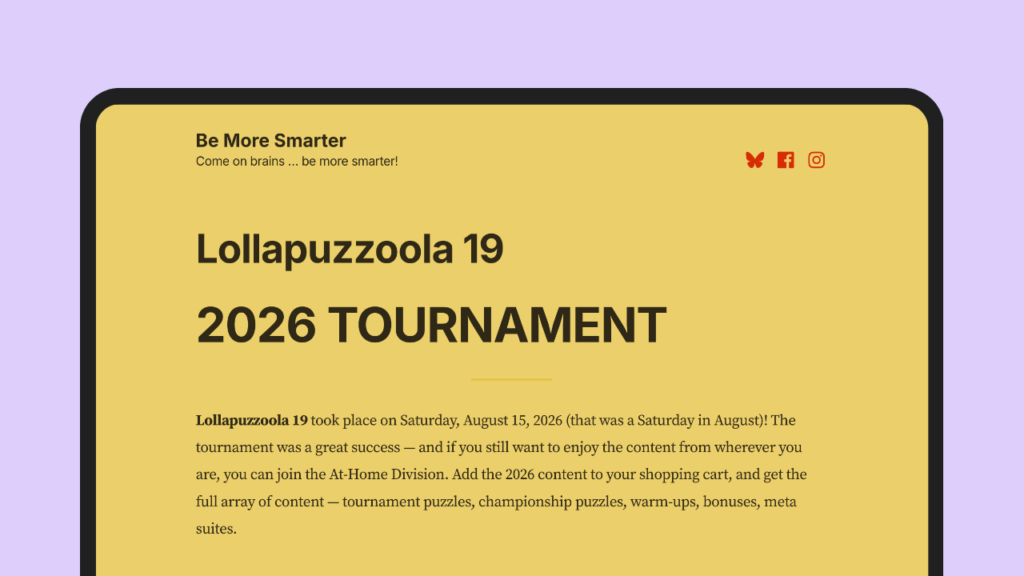
Lollapuzzoola, a popular one-day crossword tournament held annually in New York City, offers great insights into efficient logistics management. They typically host their event on a Saturday in August, making it accessible for most participants. They use a combination of paper puzzles and digital scoring to balance traditional solving with efficient result tabulation. Lollapuzzoola also incorporates breaks between rounds, allowing participants to rest and socialize, which adds to the overall experience.

Lollapuzzola is crossword lover’s dream, as is this instagram user’s:


View this post on Instagram


A post shared by Allegra (@allegramk)

Step 3: Create High-Quality Puzzles

The heart of any puzzle competition lies in the quality of its puzzles. Engaging, well-crafted puzzles will challenge participants and keep them coming back for more.

Designing puzzles in-house vs. outsourcing:

You have two main options here: creating puzzles yourself from scratch or outsourcing the task. In-house creation allows for complete control over content and difficulty, but it’s time-consuming and requires coding expertise. The other option of outsourcing to professionals would be quickest but will probably be expensive with limited customization.

Therefore, we recommend using the efficient third option of no-code platforms like PuzzleMe. These platforms save time, money and ensure high-quality customized puzzles. Additionally, PuzzleMe offers a user-friendly interface to create various puzzle types, making it an excellent option for both novice and experienced organizers.

Here is a quick tutorial for creating a sudoku:

https://youtu.be/sFYGEJvtQ1g

Ensuring appropriate difficulty levels:

Balancing difficulty is crucial. Puzzles should challenge participants without being frustratingly hard. Consider creating a range of difficulty levels to cater to different skill sets. If using PuzzleMe, you can easily adjust parameters to fine-tune the complexity of your puzzles.

Case study: Mathletics – creating challenging Sudoku puzzles

host a puzzle competition Matheletics

Mathletics, known for its challenging Sudoku competitions, demonstrates the importance of thoughtful puzzle creation. The City Montessori School in India organizes Matheletics International, an inter-school math competition with over 100 students participating from across South Asia. They use PuzzleMe’s sophisticated algorithms to generate Sudoku grids with unique solutions, ensuring fairness. PuzzleMe’s tools allow you to adjust the difficulty and create variants like Mathdoku, Killer Sudoku, etc. for high-level competitions like Mathletics.

Step 4: Score Them Right

A well-designed scoring system is crucial for the fairness and credibility of your puzzle competition. It should be transparent, easy to understand, and leave no room for ambiguity.

Creating a fair and transparent scoring system:

Develop a scoring system that accurately reflects the difficulty and complexity of each puzzle. For timed competitions, consider awarding points based on both accuracy and speed. Clearly communicate the scoring rules to all participants before the competition begins. If using a platform like PuzzleMe, take advantage of its built-in scoring features to ensure consistency and reduce human error in tabulation.

Handling tiebreakers and disputes:

Prepare for potential ties by establishing clear tiebreaker rules in advance. This could involve additional speed rounds, sudden-death puzzles, or considering secondary factors like solving time. Have a dispute resolution process in place to handle any contestations fairly. Designate impartial judges to make final decisions on ambiguous answers or rule interpretations.

Case study: WeWork’s quiz competition – structuring rounds and point systems

WeWork’s corporate quiz competitions offer an excellent model for effective scoring. They typically structure their events in multiple rounds, each with a different theme or puzzle type. Points are awarded for correct answers in each round, with some rounds offering bonus points for speed or difficulty. This multi-round structure keeps participants engaged and allows for a diverse range of skills to be showcased.

Step 5: Promote and Execute Your Event

The final step in hosting a successful puzzle competition is effective promotion and smooth execution. This stage can make or break your event, turning it from a quiet gathering into a buzz-worthy happening.

Marketing strategies:

Leverage various channels to reach your target audience. Engage with online puzzle communities on forums like Reddit or specialized puzzle websites. Don’t overlook traditional methods – local advertising through flyers or community bulletin boards can be effective, especially for smaller, community-focused events.

Here is a sample poster!

Day-of event management:

Set up a streamlined registration process, whether through a dedicated website or even a google form. On the big day, arrive early to set up and do a final check of all equipment and materials. Have a detailed schedule and stick to it as closely as possible. Designate roles to team members for various tasks like registration, timekeeping, and score tabulation. Be prepared to handle unexpected issues swiftly and calmly.

The British Jigsaw Championship’s execution strategy:

british jigsaw

The British Jigsaw Championships exemplify excellent promotion and execution. They partner with puzzle manufacturers for sponsorships and buzz, utilizing puzzle magazines, local press, and social media for marketing.

Their success lies in balancing serious competition with a sense of community, appealing to both dedicated puzzlers and casual enthusiasts. This approach ensures a smooth, enjoyable event that participants eagerly anticipate each year.

Hosting Made Fun!

Organizing a puzzle competition doesn’t have to be a headache-inducing challenge. With these five steps and the right tools, you can create an event that’s as enjoyable for you as it is for your participants.

With PuzzleMe in your toolkit, you can concentrate on crafting a memorable experience for your participants. From customizable difficulty levels to seamless digital integration, PuzzleMe transforms the complex task of puzzle creation into a piece of cake. So why stress? Embrace the fun of hosting and let PuzzleMe take care of the rest.

Your next puzzle competition is just a few clicks away!

Gamification for Sales: The Complete Guide

Ever caught yourself playing a quick game on your phone while waiting in line, only to realize you’ve just learned about a new product? Welcome to the world of gamification for sales. It’s not just about making your sales team training fun but it’s about making selling fun!

So, what exactly is gamification for sales? Imagine taking all the elements that make games addictive – the challenges, the rewards, the sense of achievement – and cleverly weaving them into your sales. Gamifying sales is a digital interactive strategy that captivates your audience, educates them, and gently guides them toward a purchase.

More than just fun, we’re excited for the potential of these games to kickstart conversations, deepen connections, and open fresh avenues for knowledge and opportunities for our members

LinkedIn spokesperson

The best part? It works. According to recent research, Gamification has been shown to increase customer acquisitions by as much as 700%. In a world where attention is the new currency, games are like a magnet for customer engagement. They’re not just seeing your product; they’re interacting with it, learning about it, and forming a connection – exactly what sales is all about.

Ready to explore how you can turn your sales strategy into a game your customers will love? Let’s dive right in!

Why Gamification for Sales?

Benefits Of Gamification for salesYou might be thinking, why does gamification work better than traditional methods? That is because games trigger a cocktail of feel-good chemicals in our brains. Dopamine spikes when we solve a challenge or earn a reward, creating a sense of achievement that keeps us coming back for more.

Additionally, Games create a space where consumers can interact with products in a low-pressure, enjoyable environment. This is where the magic happens – the formation of emotional connections.

When a game is entertaining, it creates positive emotions. When that game is linked to a product, those good feelings transfer over. Suddenly, that product isn’t just another item on a shelf; it’s associated with the player’s fun, accomplishment, and positive experiences.

By understanding and leveraging these psychological and emotional aspects, marketers can craft game-based strategies that not only entertain but also effectively showcase products, build brand loyalty, and ultimately drive sales in an increasingly competitive marketplace.

Types of Games for Product Sales

Effective game-based sales strategies employ a variety of game types, each offering unique advantages for engaging consumers and promoting products. Here are some popular options:

Puzzle Games

Puzzle games like crosswords, word searches, and sudoku can be customized to incorporate product-related themes or information. They are a very powerful tool for gamification for sales. These games can also be turned into gamified ads that challenge players’ problem-solving skills while subtly introducing product features or brand messaging.

Example: An automobile brand creates a crossword puzzle where some clues relate to cars, educating consumers about their product line. Try it yourself!

gamify salesQuizzes and Trivia

These games test and expand consumers’ knowledge about products, industries, or related topics. They’re excellent for educational marketing and can quickly go viral on social media attracting engaged customers. 

Example: A hotel chain develops a quiz to test users’ knowledge of different foods, highlight their menu, and provide a fun way to explore dining options. 

gamification for salesInteractive Product Demos

These games allow potential customers to virtually experience products before purchasing. They’re particularly effective for complex or high-involvement products. 

Example: A message-automating business creates a story-driven product demo where the prospects can see how to use their service to automate processes. Read examples here.

Augmented Reality Experiences

AR games blend digital elements with the real world, creating immersive experiences that showcase products in users’ own environments. This helps the customer imagine their life with the product, leading to greater chances of purchase. AR games open an entire sub-field of gamification for sales. 

Example: A furniture retailer develops an AR app that lets users place virtual furniture in their homes, gamifying the process with challenges or rewards.


Social Media Challenges

These viral, shareable games or contests encourage user participation and content creation, amplifying brand reach through social networks. In the age of the internet, social media challenges are a popular way to gamify sales.

Example: Apple launched the #shotoniphone challenge on social media, gamifying daily photography and encouraging participants to share their art. The campaign contributed to increased sales of the iPhone 6s, particularly among the target audience (source).


View this post on Instagram


A post shared by apple (@apple)

Each of these game types offers unique opportunities to engage consumers, educate them about products, and create memorable brand experiences. The key is selecting the game type that best aligns with your product, target audience, and sales objectives.

Implementing Gamification for Sales

Ideas and visions are great, but the real goal is flawless execution. Here are some key elements to keep in mind while gamifying your sales!

Choosing the Right Game Type for Your Product

gamification for sales- game typesSelect a game format that aligns with your product and target audience. Consider:

  • Product Complexity
  • Target demographic preferences
  • Brand personality
  • Sales message

For example, a puzzle game might work well for a news app, while an AR experience could be ideal for a furniture retailer.

Ensuring Accessibility Across Platforms

Optimize your game for various devices and platforms to maximize reach and success for your gamification for sales. Consider:

  • Mobile responsiveness
  • Browser compatibility
  • Load times and performance
  • User interface adaptability

A seamless, accessible experience ensures broader participation and engagement. This can be achieved through careful selection of the software used to create and embed the game. Softwares like Puzzlme help ensure smooth experience on every device. Read about it here!

Incorporating Call-to-Actions and Purchase Opportunities

Strategically place CTAs and purchase options within the game flow. These could include:

  • “Learn More”/ “Buy Now” buttons linking to product pages
  • Reward redemption for real products
  • Exclusive offers for game completion

Ensure these elements enhance rather than disrupt the gaming experience. By following these implementation strategies, you can create a game-based sales initiative that not only engages your audience but also effectively drives product awareness and sales.

Measuring the Success

To ensure your game-based sales efforts are delivering results, it’s crucial to implement robust measurement and analysis practices. Here’s how to effectively gauge the success of your strategies:

Key Performance Indicators (KPIs) 

Monitor these essential metrics to evaluate your gamification for sales strategy performance: These KPIs fall into three main categories: engagement, marketing, and sales.

  1. Engagement metrics provide insights into player behavior and include the number of players, average session duration, return rate, and completion rate. These indicators help you understand how captivating and sticky your game is.
  2. Marketing metrics measure the broader impact of your game on brand perception and product awareness. Keep an eye on brand awareness lift, increases in product knowledge among players, and the game’s virality through social shares.
  3. Finally, sales metrics directly tie your game’s performance to business outcomes. Track the click-through rate from your game to product pages, the conversion rate of players into customers, the revenue generated from game-driven sales, and the overall return on investment (ROI) of your gamification strategy.

Tools for Analysis

puzzleme analyticsLeverage these tools to gather and interpret data:

  • Game Analytics Platforms: Use specialized software with built-in user tracking to track in-game behavior and performance metrics. 
  • Web Analytics: Implement tools like Google Analytics to monitor traffic from your game to your website or product pages.
  • CRM Integration: Connect your game data with your Customer Relationship Management system to track long-term impact on customer behavior and loyalty.
  • Heat Mapping Tools: Visualize user interactions within your game to identify areas of high engagement or potential improvement.

Gamify Sales Today

As we’ve explored throughout this guide, gamification for sales presents a powerful and innovative approach to product sales. 

As you consider incorporating gamification into your sales strategy, remember that you don’t have to start from scratch. PuzzleMe offers a versatile platform that can help you quickly and easily implement engaging puzzle-based sales campaigns.

Ready to take your sales strategy to the next level? Let’s turn your sales strategy into a game everyone wants to play!

Boost your sales

Gamification in HR: The Complete Guide

Gamification in HR isn’t just a buzzword—it’s a powerful strategy revolutionizing how companies engage, train, and retain talent. By applying game-design elements to HR processes, organizations are turning routine tasks into exciting challenges, boosting employee motivation and productivity.

As we dive into this guide, you’ll discover how gamification can breathe new life into your HR initiatives.

What is Gamification in HR?

gamification in hr

Gamification in HR refers to the application of game-design elements and principles to human resources processes and activities. At its core, it’s about leveraging people’s natural desires for competition, achievement, and rewards to enhance engagement and motivation in the workplace.

HR gamification uses several key features. Some of them are:

  • Point systems that reward actions.
  • Badges help recognize small achievements.
  • Leaderboards encourage friendly competition.
  • Progress bars show advancement keeping employees engaged.
  • Virtual rewards offer incentives to work better.

Importantly, gamification also often incorporates easy-to-play games, such as:

  • Quizzes: Test knowledge on various trends and topics
  • Crosswords: Engage employees with fun facts about the company
  • Puzzle-solving: Develop problem-solving skills through interactive puzzles
  • Scavenger hunts: Encourage exploration of company resources or office spaces

These simple games can be integrated into various HR functions like onboarding, training, and team building. For instance, a new hire orientation might include a friendly quiz about company culture, or a departmental meeting could kick off with a quick trivia challenge about recent projects. To further enhance employee development, integrating mentoring software allows HR teams to pair games and interactive activities with structured mentorship programs, providing guidance, tracking progress, and reinforcing learning in a fun and engaging way.

PuzzleMe excels in creating these types of engaging, easy-to-implement games. Our platform allows HR professionals to quickly design custom quizzes, puzzles, and challenges that align with their specific organizational needs. Incorporating all the key features of gamification in HR, PuzzleMe makes gamification accessible and effective for companies of all sizes.

Benefits of Gamification in HR


Research by TalentLMS in 2019 found that gamification makes employees feel more productive (89%) and happier (88%) at work. Gamification remolds HR practices, offering multiple advantages:

1. Improved learning and development: Game-based training makes skill acquisition fun and effective.
2. Enhanced recruitment: Creative assessments attract top talent and showcase company culture.
3. Better performance management: Real-time feedback and clear goals drive productivity.
4. Boosted workplace morale: Friendly competition and rewards create a positive atmosphere.

Gamification doesn’t just offer multiple benefits – it’s a game-changer for HR professionals looking to boost engagement in their initiatives. This innovative approach transforms routine HR activities into exciting, participatory experiences making your job significantly easier. With tools that convert Word to PPT AI, HR teams can also repurpose their gamified strategies into visually engaging presentations that are easy to share across the organization.

Now that we’ve covered the basics of gamification in HR, let’s explore some real-world examples

Case Studies: Real-world HR Gamification Examples

Innovative companies are leveraging gamification to address various HR challenges, creating engaging experiences that drive meaningful results. Let’s explore two compelling HR gamification examples:

WeWork: Fostering Community Through Interactive Quizzes

WeWork has implemented a unique approach to community building in their coworking spaces. They host regular weekly quizzes, bringing together individuals from diverse companies. Using PuzzleMe’s platform, WeWork creates engaging quiz content that encourages participation and interaction.

These quizzes serve as a catalyst for networking, enabling professionals to connect in a relaxed, enjoyable setting. This initiative has significantly enhanced the sense of community within WeWork spaces, improving tenant satisfaction and fostering valuable cross-company relationships.

Wework gamification in hrMiQ: Championing Inclusivity with Pride Month Word Games

MiQ, like many other companies faced the challenge of promoting inclusivity and celebrating diversity during Pride Month in a meaningful way. Their solution was both creative and effective: they implemented daily LGBTQ+ themed Custom Wordle/Wordrow games using PuzzleMe.

This initiative went beyond mere entertainment. The daily word games increased awareness of LGBTQ+ topics and sparked important discussions around inclusivity. By integrating these games into their daily routines, MiQ reinforced their commitment to diversity and fostered a more inclusive workplace culture.

Try Now:

Implementing Gamification in Your HR Strategy

Integrating gamification into your HR strategy can be a transformative but daunting process. Here’s a breakdown of how to get started:

1. Define Clear Objectives: Identify specific HR goals you want to achieve through gamification.

2. Understand Your Audience: Analyze your employees’ preferences and motivations to design engaging games.

3. Start Small: Begin with a pilot program in one area of HR before expanding.

4. Choose the Right Platform: Select a versatile and user-friendly platform like PuzzleMe™. It offers a range of customizable games and quizzes suitable for various HR initiatives.

5. Design Engaging Content: Create games that align with your objectives and resonate with your employees.

6. Implement and Iterate: Launch your gamified program and be prepared to adjust based on feedback.

7. Measure Success: Track key performance indicators (KPIs) such as participation rates, completion times, and skill improvement.

8. Calculate ROI: Evaluate the impact on HR metrics like employee engagement, retention rates, and training effectiveness.

Remember, successful gamification in HR is an ongoing process of refinement and adaptation to meet evolving organizational needs. Additionally, the right tools make the right impact, so let us get into it.

Ultimate Platform For Gamification in HR

Gamification has proven to be a powerful tool in modern HR strategies, enhancing engagement, learning, and performance across various HR functions. As we’ve explored, it can transform recruitment, training, and even company culture when implemented effectively.

For HR professionals looking to harness the power of gamification, choosing the right platform is crucial. This is where PuzzleMe stands out as the convenient solution for HR gamification needs.

PuzzleMe offers:

  1. Easy-to-use tools for creating custom quizzes, puzzles, crosswords, sudoku, and more
  2. Multiplayer & contest mode for friendly competition, online or offline
  3. Analytics to measure engagement and effectiveness
  4. Seamless integration with existing HR systems
  5. Multimedia mode for making interactive games
  6. Versatile applications across HR functions, from onboarding to ongoing training

Whether you’re aiming to improve employee networking like WeWork or promote inclusivity like MiQ, PuzzleMe provides the flexibility and functionality to bring your gamification ideas to life.

Ready to revolutionize your HR practices? Take the first step towards engaging, effective HR gamification.

Hassle-free teamwork