
CreateFuture is an AI-native consultancy which has seen rapid growth over the last few years, increasing their headcount from one-hundred and fifty to five hundred employees in the last five years, most of whom work remotely. They use PuzzleMe’s Slack app to re-create watercooler moments and give remote employees something to bond over.
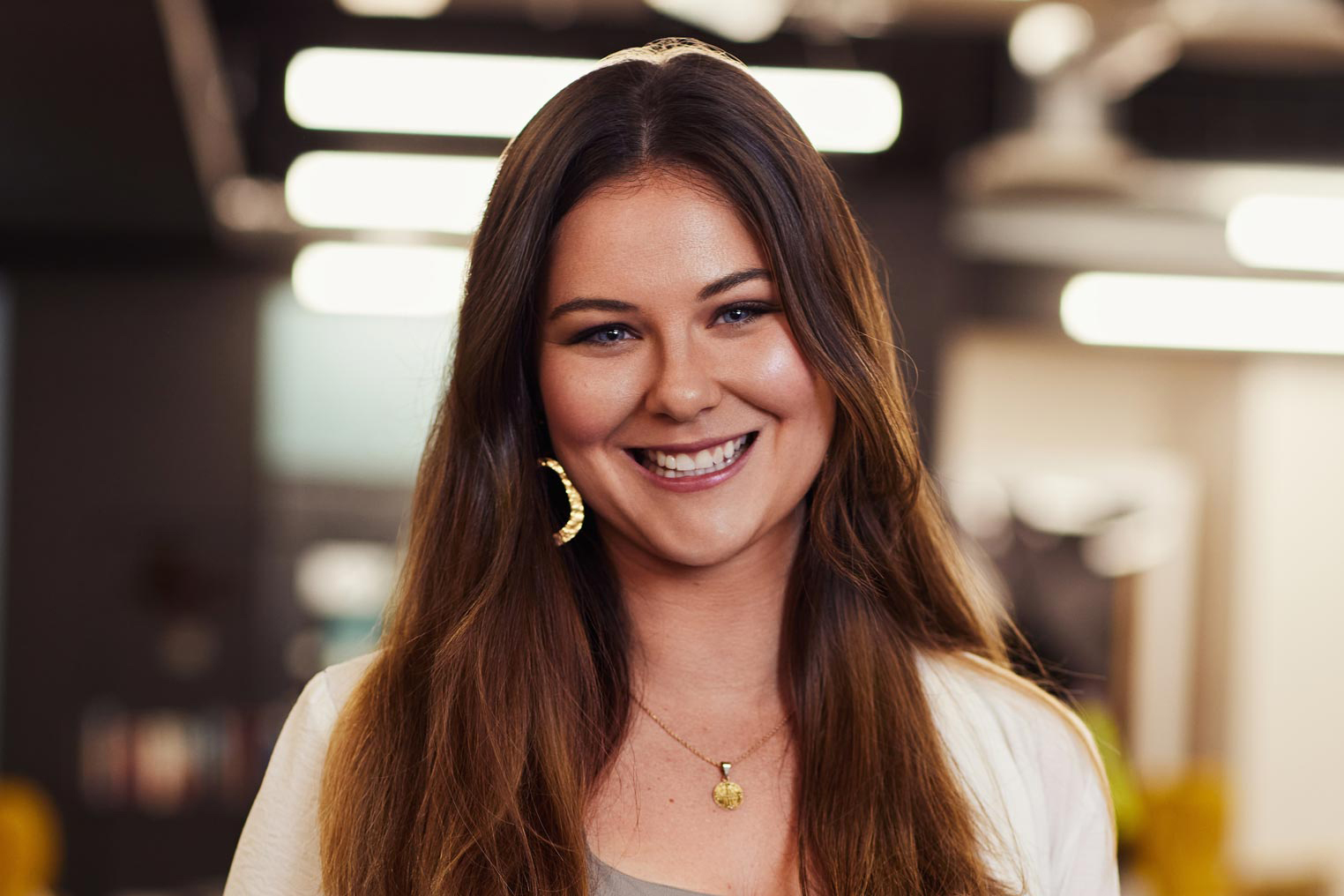
Sophia Pilos Narron is in charge of internal communications at CreateFuture. In this interview, we touch upon how she uses PuzzleMe to post bi-weekly puzzles and keeps the CreateFuture team talking and competing on Slack.
To begin, I’d love to know what your inspiration was for getting started with Wordle-style puzzles for your team.
Sophia: We use Slack as our main communication system internally. We have a lot of social channels that people can join to talk about shared interests but our “Fun Club” channel is the only channel that is not strictly business that you’re automatically added to when you join; it’s just a place for talking about whatever you want, really.
I noticed that people were sharing their New York Times Wordle scores in that channel. I love playing Wordle and doing puzzles myself—I do them to wake up my brain in the morning before starting work. I thought it’d be cool if we had our own version of Wordle just for us. So I started Googling, found Amuse Labs, and started creating them. At first, I was doing it every day, but that became a lot of work. So I switched it to every Monday to help everyone wake up and get ready for the week, and every Friday to mark the end of the week and wind down. People really liked it, so I kept doing it and now it’s become a bit of a tradition.
We also used to do Sudoku as a company through one of our life insurance providers’ apps, and people got really into playing that and sharing their scores. You would hear people in the office talking about how fast someone solved it. Because most of our employees are software engineers, they eat those types of games up. It just felt natural.
Your company has grown from 150 to 500 employees over the past five years. As the culture and communications person, how has that transition been?
Sophia: Any startup is going to go through what I like to call it the “puberty phase” of business maturity, where we’re trying to align who we were when we were smaller with the size we are now and our ambitions to keep growing. It can be hard to maintain culture during this phase because there are now more people who are new to the business than people who were here during the startup days.
CreateFuture had 60 people for a really long time, then 150, which was still pretty manageable. Then when COVID hit and people had to work remotely and that stayed the norm as we quickly grew, the challenge became: how do we keep that culture while remote, especially when so much of our business is billable by clients? The bigger you get, the more diverse types of people you onboard—some may just come to work to do work, and they prefer to focus on their work than do a Wordle, but for a lot of people, something that everyone can do together can be a lifeline for connection to colleagues and the business. I think giving people the opportunity to embrace culture and a communal activity is key. No one asked me to do the Wordle, and it wouldn’t be a dark stain on my job performance if I stopped doing it, but my job is a lot easier when we have a good culture and people are happy, so I like to see it as a part of my remit.
The bigger you get, the more diverse types of people you onboard—some may just come to work to do work, and they prefer to focus on their work than do a Wordle, but for a lot of people, something that everyone can do together can be a lifeline for connection to colleagues and the business.
What other fun things do you do on Slack to keep things interesting?
Sophia: We love an emoji reaction. We consistently create hundreds of custom emojis. We have emojis of different people who work at the company, popular memes, and inside jokes. I dressed up as a snowman for the office Christmas party last year and someone had created a Slack emoji called ‘Snow-phia’ by the next morning. My dog even has three custom reaction emojis that other people have made for him! I love the custom emojis because it expresses so much more than a standard thumbs-up and really helps build a sense of culture and community.
We also have social channels that have organically popped up. We don’t push them out to people but anyone can join if they want. A channel called “The Social Zoo” is one of our most used channels. It’s just a place for people to post pictures of their pets. It’s another great way to get to know colleagues you might not work with directly. I’ve found that if you give people an opportunity to find connection in a genuine and organic way, they tend to make the most of it. And that’s how you create a culture where people care about the company, their colleagues, and, ultimately, our shared success.
Can you tell us what key challenges you focus on solving within your remit?
Sophia: Internal communications is a unique role. My job is to not simply hit ‘send’ on company messages, but to understand what the people we’re communicating to are thinking and feeling, and support senior leadership to ensure our messaging meets them where they’re at. A lot of people don’t realize the specialism of communication because everyone communicates every day. I like to explain it by saying that I can create a budget, but I couldn’t work in the finance team. Having an internal communication specialist means that leadership can focus on making decisions because I’m focusing on how we’ll tell people about it and buy-in to the idea.
Ultimately, my job is to make sure people are educated, engaged, and excited about the information they’re being told. While writing copy and scheduling messages is a big part of my role, my main task is to make sure our employees understand what decisions are being made, why they’re being made, and how it impacts them – because that’s really what matters to people.
It sounds like your role became especially critical during the shift to remote work.
Sophia: I think COVID really enhanced and legitimised the need for an internal communications team in businesses because suddenly everyone was remote. Before, leadership was just there in the office and people were able to communicate directly in the office. When everyone went home, businesses still needed to make sure their employees understood what was happening and what decisions were being made. And that’s hard when you have a large number of people with different mindsets, personalities, backgrounds, and demographics – especially during a pandemic when everyone is having a different experience of the same global situation. It made efficient and effective internal comms vital in every company.
How would you characterize the reception to the games? Do you have any numbers or specific feedback to share?
Sophia: I post the puzzles at 8:30 AM on Mondays and Fridays, and people immediately dive into them. I get so many notifications from people commenting their scores in the Slack threads. People even send me screenshots of their results—if you look at my Slack files, it’s just a sea of screenshots.
I get so many notifications from people commenting their scores in the Slack threads. People even send me screenshots of their results—if you look at my Slack files, it’s just a sea of screenshots.
A couple of Mondays ago was a UK bank holiday, and when people returned to work on Tuesday morning, my Slack lit up because people opened the app and immediately went to do the WordroW. It gives people a common activity to talk about. If you’re meeting someone new at the company, it’s like talking about the weather: “Have you done the WordroW today? How did you do?”
How much time does it take to manage this twice a week? Do you set them up in bulk?
Sophia: I do them in bulk. I usually set up the next month’s WordroWs all at once on my calendar. Sometimes I do a theme – For example, our last theme was “Spring,” using words like flora and green. Around New Year’s, I used words like renew but didn’t tell them the theme—they had to guess it, though they figured it out pretty easily. It does become harder the longer you do it because you start running out of five-letter words that aren’t too obscure.
Have you thought about trying other puzzle formats?
Sophia: We do a monthly culture newsletter called The Water Cooler, and I include a bigger puzzle for each edition. We’ve done word searches where they have to find clients’ names or business keywords, and we’ve done crosswords too.
I’m planning to try to change things up soon, provided people don’t revolt against me! If I run out of five-letter words, I might replace WordroW with a different puzzle. They really like Sudoku, and they love pets, so we’ll see what I can come up with – it’s all about when I have the time to set it up.
One cool thing people do with newsletters is sharing stats in the next edition, like “This was the toughest clue last week.” It keeps the conversation going.
Sophia: Oh yeah! We have a highly competitive bunch. Back when we did Sudoku, there were genuine accusations of cheating! People were screenshotting times and saying, “There’s no way they solved that in 30 seconds, they must be using an AI.” And this was before AI was even a common thing. People love posting how long it took them, and if someone gets the WordroW on their first or second guess, they’ll get 20 clapping emojis. It creates spirited competition and interaction between remote employees who have likely never met in person.
People love posting how long it took them, and if someone gets the WordroW on their first or second guess, they’ll get 20 clapping emojis. It creates spirited competition and interaction between remote employees who have likely never met in person.
Regarding the Slack app specifically, what do you like about it, and what could we improve?
Sophia: I really like being able to see people’s timings and stats because before this, I was just sharing a basic link.
How do you see games contributing to the internal communications function over the next few years?
Sophia: Culture has become a massive part of business. It’s a major factor in people deciding what company they want to work at. People will leave a job just because of the culture, whereas previous generations might have stayed at the same company for 35 years.
Giving people a reason to commune together outside of their immediate team and providing a company-endorsed, non-work activity can organically enhance culture. And in my role, it’s hard to communicate corporate updates to employees if they don’t want to be there in the first place, so a strong culture helps support a strong business.
Puzzles are incredibly inclusive because anyone can do them, regardless of whether they are good at them or not. It builds a sense that this is a place where we can both work and play.
I think we’ll see an increase in out-of-the-box ways to engage employees, even in Learning & Development. Instead of sitting people in a classroom for five hours, let’s make it interactive and get their brains moving. Puzzles are incredibly inclusive because anyone can do them, regardless of whether they are good at them or not. It builds a sense that this is a place where we can both work and play.

- CreateFuture Keeps Slack Buzzing With Their Take on Wordle - May 27, 2026
- Danish Media Outlet Creates Science-Based Games For Readers - May 22, 2026
- B Square Bulletin Engages Local Audience with Local Puzzles - May 22, 2026
